
Thinking about replacing your natural lawn with artificial grass? One of the first questions Indiana homeowners and property managers ask is: How much does artificial grass installation cost in Indiana?
The answer depends on several factors, including the size of your lawn, the artificial turf you choose, existing soil conditions, drainage requirements, and installation complexity.
At SYNLawn Indiana, we believe understanding these costs is an important first step toward making a confident investment in your outdoor space. Whether you’re considering a low-maintenance backyard, a pet-friendly lawn, or a commercial landscape, knowing what goes into an artificial grass quote can help you plan your project and compare installation options.
In this guide, we’ll break down artificial turf installation costs, explain what influences pricing in Indiana, and share what to look for when choosing a professional installer.
How Much Does Artificial Grass Cost Per Square Foot in Indiana?
Artificial grass installation is typically priced by the square foot, but the total cost includes much more than the turf itself.
According to national 2026 pricing information from Angi, professionally installed artificial grass can range from approximately $6 to $22 per square foot, depending on materials, labor, and site preparation. These are national reference figures, not verified SYNLawn Indiana installation prices.
Your actual artificial turf installation cost in Indiana will depend on the unique requirements of your property.
A professional installation quote generally accounts for:
- Artificial grass materials and product selection
- Removal of existing grass, soil, or landscaping
- Excavation and surface grading
- Crushed stone base installation and compaction
- Drainage preparation
- Turf cutting, positioning, and seaming
- Infill materials and application
- Installation labor and equipment
- Debris removal and disposal
- Additional landscaping features or upgrades
The most accurate way to determine your artificial grass installation cost is through a personalized estimate that evaluates your property’s size, existing conditions, and intended use.
What Affects Artificial Grass Installation Costs in Indiana?
While two lawns may have the same square footage, their installation costs can differ significantly.
Here are eight important factors that influence the final price.
1. Artificial Grass Materials and Quality
Not all artificial turf products are created equal. Different varieties are engineered for different applications, performance requirements, and aesthetic preferences.
For example, a decorative residential lawn may require different turf characteristics than a heavily used pet area or commercial landscape.
At SYNLawn Indiana, we offer premium artificial grass systems designed for a variety of outdoor applications. Our product technologies include Super Yarn™, EnviroLoc+™, and specialized turf construction options intended to support durability and long-term performance.
When selecting artificial grass, consider:
- Blade structure and fiber resilience: Turf fibers should suit the expected amount of foot traffic.
- Pile height and density: These characteristics influence the appearance, feel, and maintenance requirements of your lawn.
- Backing construction: Different backing systems offer different drainage and durability characteristics.
- UV resistance: Quality turf should be engineered to withstand prolonged sunlight exposure.
- Intended application: Pet turf, playground turf, putting greens, and residential lawns may require different systems.
Although premium turf materials may involve a higher initial investment, selecting a product that matches your property’s needs can help reduce premature wear and unnecessary repairs.
Explore our residential artificial grass solutions to learn more.
2. Excavation and Existing Lawn Removal
Before new artificial grass can be installed, the existing surface often needs to be prepared.
This may involve removing natural grass, roots, topsoil, rocks, or other materials that could interfere with proper installation.
The amount of excavation depends on existing conditions and the specifications of the proposed turf system.
Factors that may increase preparation costs include heavily compacted soil, uneven ground, substantial root systems, existing landscaping materials, and difficult excavation conditions.
For Indiana properties, evaluating the existing soil is particularly important. Some sites contain clay-rich soils that can complicate drainage and require additional attention during construction.
Proper excavation helps establish the foundation for a smooth, stable artificial lawn.
3. Crushed Stone Base Preparation
One of the most important components of a professional artificial turf installation is the base beneath the grass.
A properly designed and compacted aggregate base provides support, helps maintain the finished grade, and works with the drainage design to manage water.
Depending on site conditions, base preparation may include:
- Installing specified crushed stone or aggregate
- Compacting the material in appropriate layers
- Establishing the necessary surface grade
- Creating a stable foundation for turf installation
A base may require additional preparation if existing soils are unstable or if the installation area experiences drainage problems.
At SYNLawn Indiana, we understand that the quality of an artificial lawn depends on more than what you see on the surface. Professional base preparation is an essential part of designing an installation for lasting performance.
4. Drainage Requirements
Indiana experiences seasonal rain, snow, and changing ground conditions throughout the year.
Because of this, drainage should be a major consideration when evaluating your artificial grass installation cost.
Although many artificial turf products are designed to allow water to pass through their backing, drainage performance depends on the complete installed system, including the aggregate base, underlying soil, grading, and available drainage outlets.
Depending on your property, installation may require additional grading, drainage aggregate, subsurface drainage lines, or other site-specific solutions.
If your yard already experiences standing water after heavy rain, addressing the underlying issue before installation is especially important.
A quality artificial grass installation should account for where water goes after it passes through the turf—not simply how quickly the turf backing drains.
5. Infill Materials
Infill is material applied between artificial turf fibers to support the finished surface and help the turf perform as designed.
Different turf systems may use different infill materials, while some products have specialized requirements.
Infill selection can influence appearance, fiber support, surface firmness, and maintenance needs.
SYNLawn offers specialized infill options, including Envirofill®, for compatible applications.
The cost of infill depends on the material selected, the recommended application rate, and the size of the installation.
6. Installation Labor and Expertise
Labor is another significant component of artificial turf installation costs in Indiana.
Professional installation involves much more than rolling synthetic grass across a prepared surface.
Experienced turf installers must properly measure the area, prepare the foundation, position the turf, create seams, secure edges, apply the specified infill, and finish the installation.
Complex shapes, numerous seams, decorative borders, and unusual site conditions can increase installation time.
Working with experienced Indiana artificial turf installers helps ensure that each phase of construction receives the attention it requires.
7. Site Accessibility and Material Disposal
Some projects are more difficult to access than others.
A backyard with a wide access gate may allow equipment and materials to reach the work area efficiently. A courtyard surrounded by fencing, narrow passageways, or steep terrain may require more manual labor.
Your estimate should also account for removal and disposal of excavated soil, sod, and other debris. Additional hauling, equipment limitations, or longer material-handling distances can increase the overall installation cost.
8. Optional Features and Upgrades
Artificial grass can be customized to complement your property’s design and functionality.
Depending on your goals, optional enhancements may include:
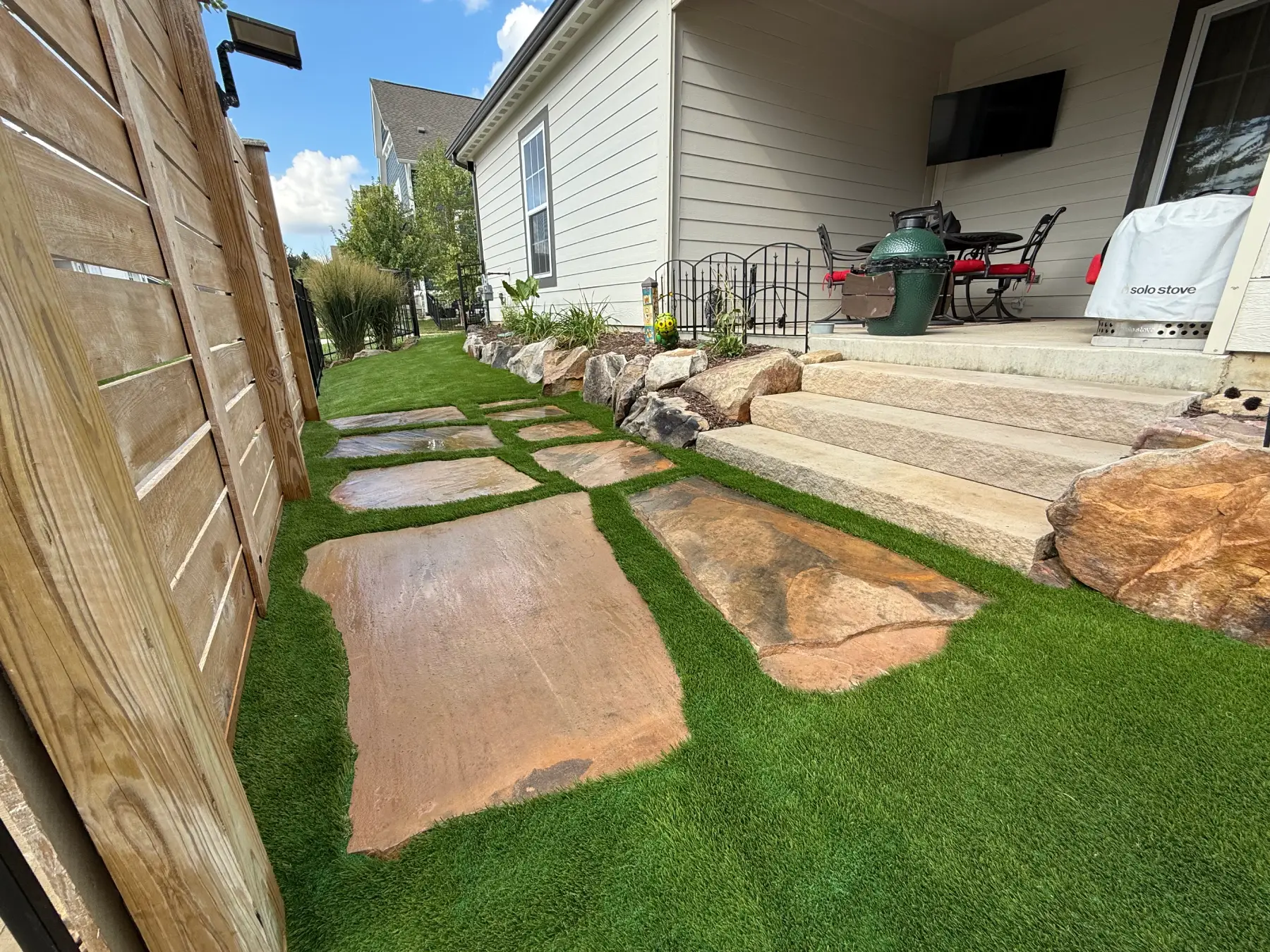
- Decorative paver or stone borders
- Custom lawn shapes and landscape transitions
- Dedicated pet relief areas
- Additional drainage features
- Specialized turf for high-traffic areas
- Backyard putting greens or chipping zones
- Playground cushioning systems
- Walkways and integrated hardscaping
These upgrades should be evaluated separately from the cost of a basic lawn installation to create a more accurate project budget.
How Much Does a 500-Square-Foot Artificial Grass Installation Cost?
A 500-square-foot lawn is a useful example for understanding how artificial grass installation costs are calculated.
Using the broad 2026 national reference range of 6–22 per square foot, a 500-square-foot project would translate into approximately 3,000–11,000.
However, this is an illustrative national calculation, not an actual Indiana project quote or a published SYNLawn Indiana price. The finished cost could fall outside that range depending on site preparation, materials, installation complexity, and specialized features.
For example, consider two hypothetical 500-square-foot installations.
| Project feature | Standard backyard | More complex installation |
| Installation area | 500 sq. ft. | 500 sq. ft. |
| Existing surface | Relatively level lawn | Uneven lawn with obstacles |
| Accessibility | Easy equipment access | Narrow access |
| Excavation | Standard preparation | Additional excavation |
| Drainage | Existing conditions suitable | Additional drainage work |
| Turf application | Residential lawn | Specialized pet turf |
| Expected complexity | Lower | Higher |
Even though both projects involve the same square footage, the second would generally require more materials, labor, or preparation.
This is why comparing artificial turf prices by square footage alone can be misleading.
For a reliable 500-square-foot turf installation estimate, request a written proposal that identifies the complete installation scope.
Does Indiana’s Climate Affect Artificial Grass Installation Costs?
Yes. Local weather and ground conditions can influence installation design and, in some cases, the overall project cost.
Indiana’s changing seasons introduce several considerations.
Spring rainfall: Properties with poor drainage may need additional grading or subsurface preparation to manage water effectively.
Summer heat: Turf material selection, sunlight exposure, and intended use should be evaluated when choosing the appropriate system.
Autumn conditions: Falling leaves, existing landscaping, and seasonal ground moisture may influence preparation and ongoing maintenance.
Winter freezing and thawing: Appropriate base construction and drainage planning help manage the effects of changing ground conditions.
Every property is different. A well-drained site in Indianapolis may need less preparation than a property elsewhere in Indiana with persistent standing water or unstable soil.
Our team evaluates the installation area and recommends solutions based on the property’s needs rather than treating every yard as an identical project.
Is Professional Artificial Turf Installation Worth the Cost?
For many homeowners and property managers, professionally installed artificial grass offers advantages that extend beyond appearance.
Compared with traditional lawns, synthetic turf can reduce recurring mowing, fertilizer use, reseeding, and routine irrigation.
It also creates opportunities for consistently green landscaping in locations where natural grass may struggle due to shade, high traffic, or heavy use.
However, artificial turf is not maintenance-free. Occasional debris removal, cleaning, brushing, and repairs may still be necessary.
The long-term financial value depends on installation costs, the maintenance expenses being replaced, how the space is used, and the durability of the selected turf system.
When evaluating your investment, it is important to consider both the initial installation price and the expected long-term cost of ownership.

How to Compare Artificial Grass Installation Quotes in Indiana
Receiving multiple artificial grass quotes can help you understand your options, but choosing the lowest price isn’t always the best decision. A quality artificial turf installation depends on proper materials, preparation, drainage, and workmanship.
Before selecting an artificial grass installer in Indiana, make sure your written estimate includes the following:
- Installation Square Footage: The total area being covered and how measurements were calculated.
- Turf Product and Materials: The specific artificial grass product, manufacturer, and materials included.
- Excavation and Site Preparation: Removal of existing grass, soil, roots, and other materials.
- Base Construction: The type and depth of aggregate used to create a stable foundation.
- Drainage: Any grading, drainage improvements, or additional systems required.
- Infill Materials: The type of infill being used and whether it is included in the estimate.
- Labor and Installation: Costs associated with cutting, seaming, securing, and finishing the artificial turf.
- Material Disposal: Removal and hauling of excavated soil, old grass, and construction debris.
- Additional Features: Pricing for decorative borders, specialized turf, pet areas, or other upgrades.
- Warranty Coverage: Details about product warranties and installation workmanship coverage.
- Project Timeline: The estimated installation schedule and any factors that could affect completion.
Comparing these details helps you identify differences between contractors and understand exactly what you’re paying for.
At SYNLawn Indiana, we believe customers should have a clear understanding of their investment before installation begins. Our team can help explain the recommended materials, installation process, and project requirements so you can make an informed decision.
Get a Free Artificial Grass Installation Quote From SYNLawn Indiana
Artificial grass is an investment in the appearance, functionality, and long-term enjoyment of your outdoor space. Understanding the factors that influence installation cost can help you choose a solution that fits your goals and budget.
At SYNLawn Indiana, we offer premium artificial grass solutions and professional installation services for homeowners, businesses, and property managers throughout Indiana.
Whether you’re planning a residential lawn, pet-friendly backyard, commercial landscape, or custom outdoor feature, our team can help you evaluate your options and develop a solution tailored to your property.
Ready to discover what artificial grass installation could cost for your Indiana property? Contact us today to schedule your free design consultation and request a personalized artificial grass quote!
Frequently Asked Questions About Artificial Grass Cost in Indiana
How much does artificial turf installation cost in Indiana?
Artificial turf installation costs vary based on square footage, turf materials, excavation, drainage, labor, and site conditions. National 2026 reference estimates span approximately 6–22 per square foot, but an accurate Indiana price requires a site-specific quote.
Is artificial grass cheaper to install than natural grass?
Artificial grass typically requires a higher upfront investment than installing natural sod. However, it can reduce ongoing mowing, irrigation, fertilizing, and reseeding expenses. Whether it costs less over time depends on your property and maintenance needs.
What is the most expensive part of artificial turf installation?
Turf materials, site preparation, and installation labor are usually among the largest expenses. On properties with grading challenges or poor drainage, excavation and base construction can become especially significant.
Does installing artificial grass require removing existing sod?
For most installations over existing natural lawns, removing the vegetation and preparing an appropriate base is necessary. The excavation requirements depend on the site and the proposed turf system.
Can artificial grass be installed on Indiana clay soil?
Yes, artificial turf can be installed on properties with clay-rich soils when the base and drainage system are designed for the site’s conditions. An installer should evaluate how water moves through and away from the installation area before construction.
Does artificial grass cost more for pet areas?
Pet turf installations may cost more when they require specialized turf, infill, additional drainage, or more detailed cleaning considerations. The final price depends on the intended use and installation requirements.
How do I get an accurate artificial grass installation quote?
Schedule a property consultation with a professional installer. The quote should account for the measured area, selected turf product, site preparation, drainage, labor, disposal, and any requested upgrades.